Marinas as Emerging Hubs for Citizen Science and Coastal Observation
While marinas have traditionally been viewed as commercial and recreational infrastructure, attention is turning to their potential to serve as operational hubs for environmental monitoring at the land-sea interface, the complex transition zone where terrestrial and marine ecosystems meet. This approach is currently being evaluated by TransEurope Marinas via their work as a partner of the EU-funded LandSeaLot project.
A Horizon Europe initiative, LandSeaLot focuses on integrating satellite and in-situ data, with hydrodynamic models and citizen science to resolve data fragmentation.
Satellites and models provide valuable large-scale information, but they cannot capture every local change occurring in coastal waters. Marinas offer an ideal opportunity to complement these data by engaging boaters and marina staff in collecting simple environmental observations, helping to complete our picture of coastal ecosystems.
Benefitting from the reach of its extensive network, TransEurope aims to test how low-cost, accessible monitoring tools can be integrated within marina life. The objective is to establish whether routine data collection by boaters and marina staff can support marine science, either by means of installing sensors on fixed infrastructure, or contributing manual observations.
Effectively bridging the land-sea interface, marinas provide safe access to local navigable waters and often host a wide community of boaters and water-sports enthusiasts. Environmental observations can be taken either right from the pontoon or via a vessel along coasts, rivers or estuaries – areas that traditionally are hard or expensive to access for scientists.
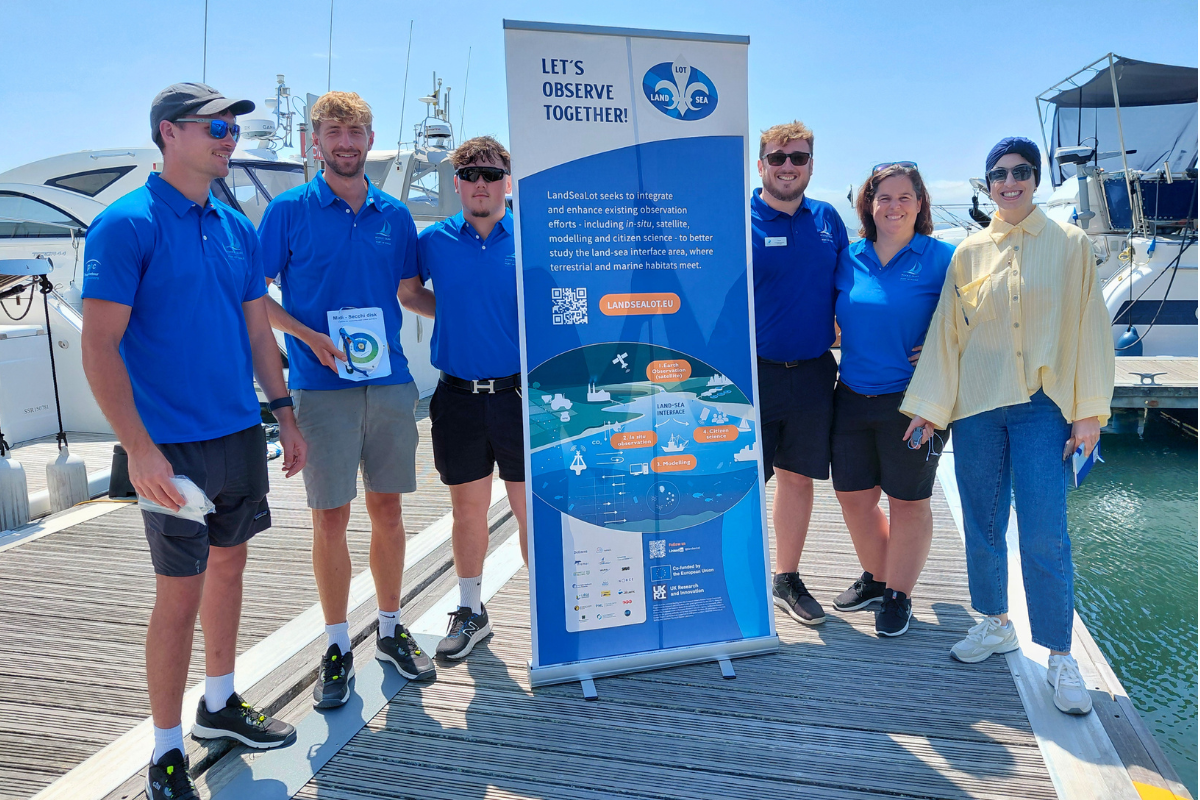
A recent visit led by TransEurope Marinas’ new researcher, Amina Kechuindi, set out to better understand the dynamics of a group of four marinas and their interest in adopting the devices. Demonstrations were provided for a midi Secchi disk that registers water clarity and colour, helping to identify changes in water quality and ecosystem conditions, and a simple temperature logger that can be left submerged and provides continuous readings over a set period, as a potentially important indicator of environmental change.
Marinas participating in this stage of the initiative are located on the UK’s south coast, within a compact radius of approximately 25nm and each in areas with multiple conservation designations. They are all highly regarded facilities, accredited with a minimum of The Yacht Harbour Association’s Five Gold Anchor awards, making them particularly suitable sites for piloting citizen science and environmental monitoring approaches.
Community outreach and boater education
Poole Quay Boat Haven and Port of Poole Harbour was first on the agenda, with a warm welcome from manager Kerrie Grey and assistant manager Tom Killick. Their popular quayside facilities right on the Poole waterfront make this a visible and accessible location for a number of excursion vessels exploring Poole Harbour’s famed wildlife.
Under the jurisdiction of the Poole Harbour Commissioners, the team plays an active role in promoting responsible boating, while interacting regularly with the region’s diverse stakeholders. The marina receives over 8,000 visiting yachts each year, including numerous international rallies and regattas. This high level of daily footfall and nautical traffic makes it a particularly relevant setting for engaging boaters in citizen science activities.
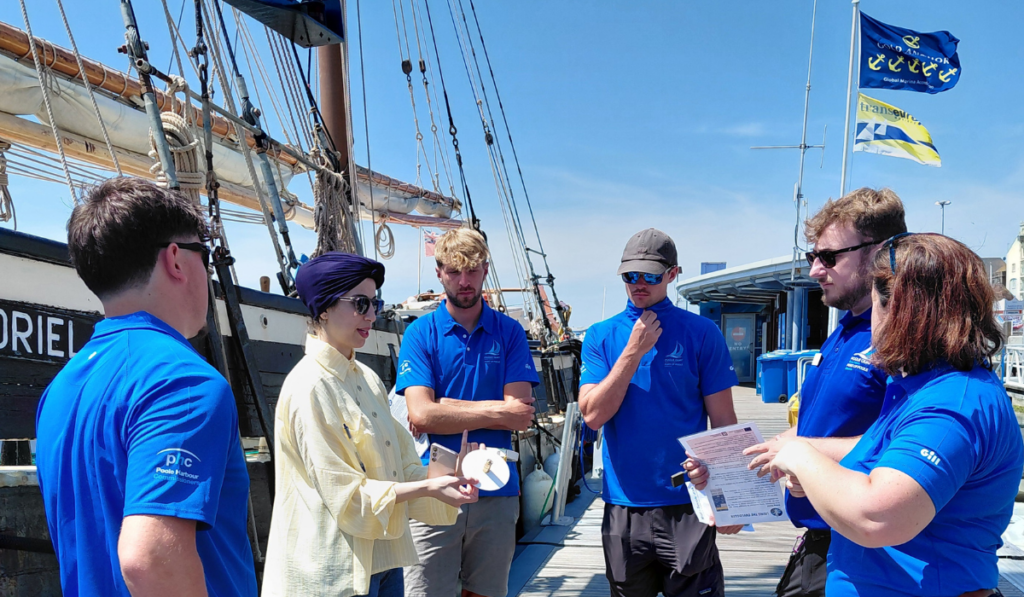
The team at Poole Quay Boat Haven and Port of Poole Marina practice using the Secchi disk
Staff assembled to join Amina’s demonstration of both the Secchi disk and Envlogger, noting how easy they were to use. As Tom commented:
“It’s great to see how simple these tasks actually are, and to know that normal people going out boating for the day can easily get involved and help the environment. It is brilliant to know you can check something like water colour and have that data feed directly into research on how our seas are changing.”
Poole’s staff demonstrated plenty of enthusiasm for embracing ocean science, recognising their potential to act as environmental ambassadors. Kerrie Gray spoke decidedly about the unique reach a busy marina has, highlighting its role as an ideal classroom for the boating public:
“We want to look at how we can use our marina, and the sheer volume of people who pass through it, as a platform to educate boaters. If we can teach them how to look after the environment when they are out at sea or in the dock, there’s a potential to have a really positive impact on the wider boating industry.”
Operational efficiency and habitat regeneration
The afternoon saw a boat trip across the Solent to Cowes Yacht Haven on the Isle of Wight. Cowes is also a mecca for international racing sailors, with fleets visibly returning to port and crews celebrating on board. With extensive hospitality facilities, Cowes YH hosts many of the Solent’s most prestigious racing events such as Cowes Week, The Round the Island Race, competitors in the Rolex Fastnet Race and most recently the Admiral’s Cup.
The marina serves as the operational arm of Cowes Town Waterfront Trust Limited, a public-facing charity that owns the entire site, and its buildings and equipment. Under this model, 100% of the commercial surplus generated by the marina is funnelled directly back into the Trust to support local maritime heritage, youth sailing initiatives, and community projects. This governance structure reinforces a strong community-oriented model, where environmental monitoring initiatives can also generate added public and ecological value.
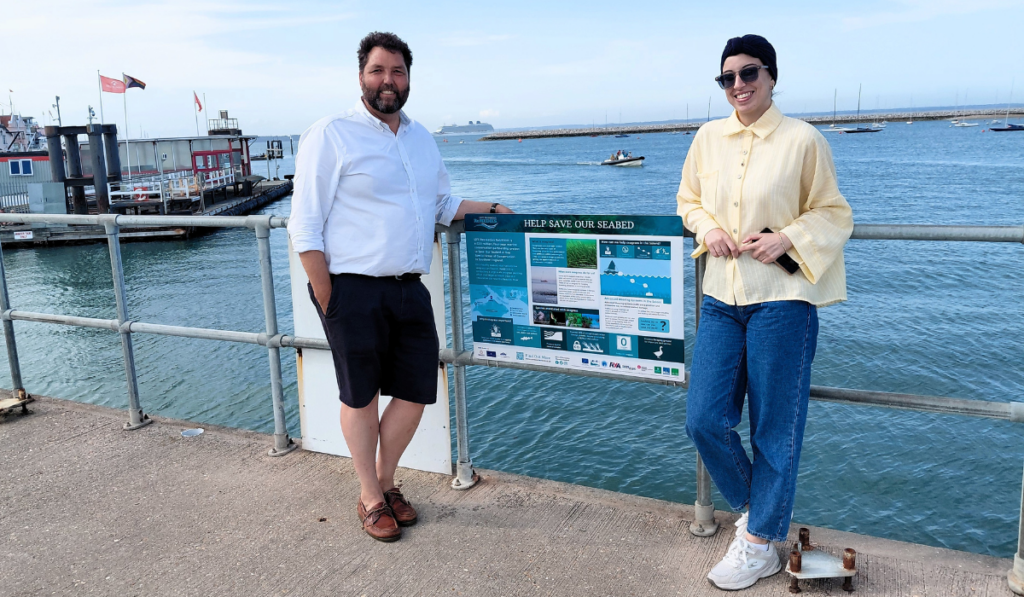
Cowes Yacht Harbour Managing Director Daniel Jehan welcomes TransEurope Marinas researcher Amina Kechuindi
Managing Director Daniel Jehan provided a fascinating tour of the marina, pointing out a bag of seagrass seedlings secured to a pontoon, as part of their participation in the LIFE Recreation ReMEDIES project where sheltered marinas areas can serve to naturally cure harvested seagrass, meant for restoration purposes. He also mentioned how boaters have noticed recent changes in marine wildlife, with observations near the marina including a seal, shark and voluminous jellyfish.
Regarding the use of sensors, Daniel reacted enthusiastically to the idea of trialling the Envloggers on two settlement plates, to track how temperature relates to biodiversity growth, particularly in diverse areas of the marina:
“We need to understand if rising temperatures are causing biofouling to accelerate, because it can have massive operational impacts. It isn’t just about our team having to go out and physically deal with the growth on pontoons and boats; a dirty hull drastically reduces boat efficiency and increases fuel burn. On top of that, weed gets drawn into intakes, causing engines to fail, potentially creating major maintenance issues.”
Restorative aquaculture and water clarity monitoring
Emsworth Yacht Harbour is understood to be amongst the UK’s oldest marinas dating back to 1965. Continuing this pioneering spirit, they also considered the nation’s first to transition recently from family to employee-ownership. Located in Chichester Harbour, the marina has been instrumental in supporting the return of native oysters, Ostrea edulis, via a restorative aquaculture and habitat conservation project, contributing to the recovery of a historically depleted species while also enhancing local biodiversity and ecosystem resilience within the harbour.
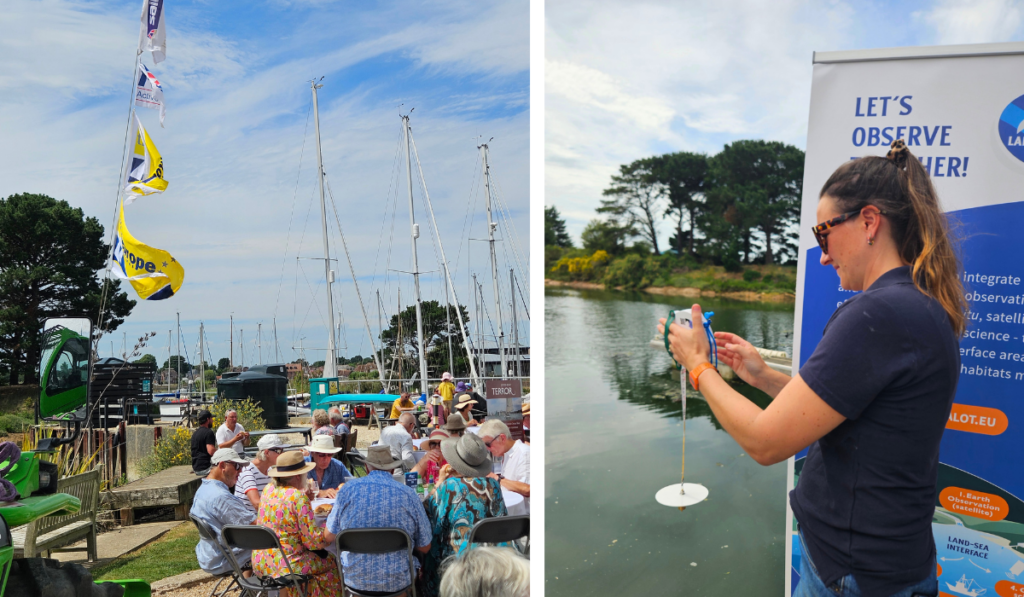
Emsworth Yacht Harbour in the glorious sunshine, with team member Lottie Johns testing the Secchi disk
Late morning, the team were busy preparing for a berth-holders party. Managing Director Tom Marfleet hosted an “Ask me anything” session where questions included topics such as the proliferation of macroalgae and concerns about incoming pollutants from agricultural run-off and sewage release; worries common to all marinas visited.
As a means to register water clarity and colour, potentially indicating the likelihood of a harmful algal bloom, the Secchi disk demonstration attracted the attention of curious berth-holders who commented on its ease of use and attractiveness for educating school groups. Duty Manager Poppy Johns generously committed to recording water quality observations for the marina.
EnvLoggers are currently being deployed at Harbour Oysters by Lottie Johns (Poppy’s sister) across separate sites to monitor how local temperature variations might affect oyster growth and mortality rates.
Local stewardship and long-term monitoring
The final visit culminated in an invitation from Harbour Master Wendy Stowe to a berth-holders’ party at Buckler’s Hard Yacht Harbour, situated on the Beaulieu River within the New Forest National Park. TransEurope Marinas and LandSeaLot were kindly provided with a stand alongside a training school and various conservation groups, with opportunities to exchange insights and chat with local boaters about how local berth-holders might be able to contribute observations to assist various projects.
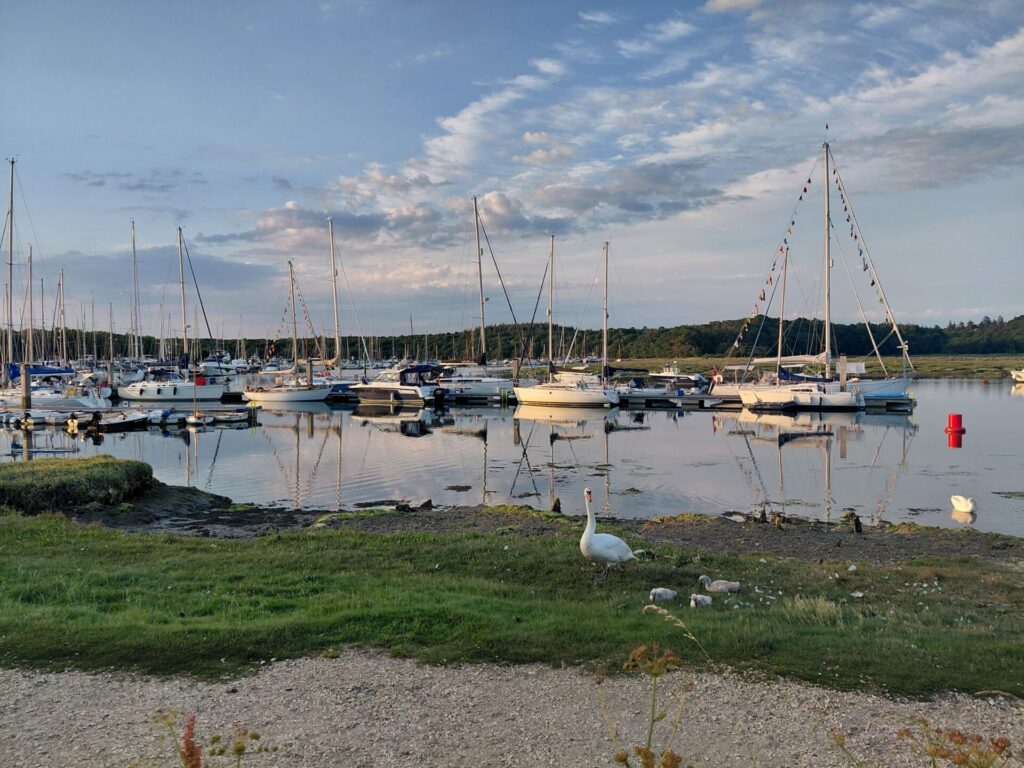
Buckler’s Hard Yacht Harbour on the Beaulieu River
The Beaulieu Estate possesses a deeply rooted cultural heritage and identity tied to its unique natural environment and historical naval ship building. Beaulieu River is recognised as a highly sensitive area, hosting a marvellous array of wildlife including migratory brent geese, lapwings, oystercatchers, kingfishers, various bird of prey, and both grey and common seals. The marina office even features an educational salt-water tank of river fish, changed every two weeks, with an interpretation board describing the species’ characteristics and behaviour, beautifully depicted by a member of the marina team.
Estate Warden Matt Phillips leads proactive conservation efforts along the River, including salt marsh grazing management, nest protection, and coordinating New Forest Water Watch testing across six key sites, while Wendy Stowe and her team assist with habitat protection, supporting seagrass restoration and running a monthly monitoring project for the river’s breeding grey and common seals.
Deputy Harbour Master, Adam Lewis, described operating a solar-powered sensor box on marina’s hoisting dock that uses a laser to measure water height and air pressure. This real-time data transmits via a SIM card every few minutes directly to their website, offering useful navigation guidance to boaters.
It is clear that the Beaulieu team is already familiar with the use of environmental sensors. The next step may be to see how best boaters can be integrated within these active conservation efforts, building on the estate’s established work with local seal counts, salt marsh management, and river education.
Next steps
The UK marina initiative is still only two months in, yet is starting to attract growing interest from a variety of different boating industry, conservation, and academic entities. Moving forward, the focus will be on evaluating how these different actors can be effectively coordinated to improve coastal observation, ensuring that data collection approaches remain simple and operationally feasible for marina teams, while still generating robust and useful datasets for research purposes.
A key priority will also be to evaluate how citizen science activities can be embedded within routine marina operations in a way that strengthens existing environmental awareness and management practices in marina communities.
For more information on LandSeaLot, visit the website: https://landsealot.eu/
……………………………….
LandSeaLot has received funding from the European Union’s Horizon Europe Framework Programme for Research and Innovation under grant agreement No 101134575. Views and opinions expressed are however those of the author(s) only and do not necessarily reflect those of the European Union or European Research Executive Agency. Neither the European Union nor the granting authority can be held responsible for them. UK participants in Horizon Europe Project LandSeaLot are supported by UKRI grant numbers: 10109592 University of Stirling and 10107554 Plymouth Marine Laboratory.
Benefits for Boaters TransEurope Marinas
50% Discount on Visitor Berthing
With a 6-month contract at a member marina, receive a 50% discount on daily visitor rates.
Valid Across All Member Marinas
Up to five days per year at each member marina, enabling multiple discounted stays.
Smart Solutions
Make the most of a digital membership platform, helpful chartlets and cruising routes.
Benefits for TransEurope Marina Members
Reward Berth-Holders & Attract visitors
Offer your long-term berth-holders exclusive discounts
Become an Environmental Steward
Take part in innovative European ocean conservation projects
Access Peer Expertise
Join a network of experienced marina managers and access specialist training for your staff
