TransEurope joins LandSeaLot at the Forth-ERA Living Lab
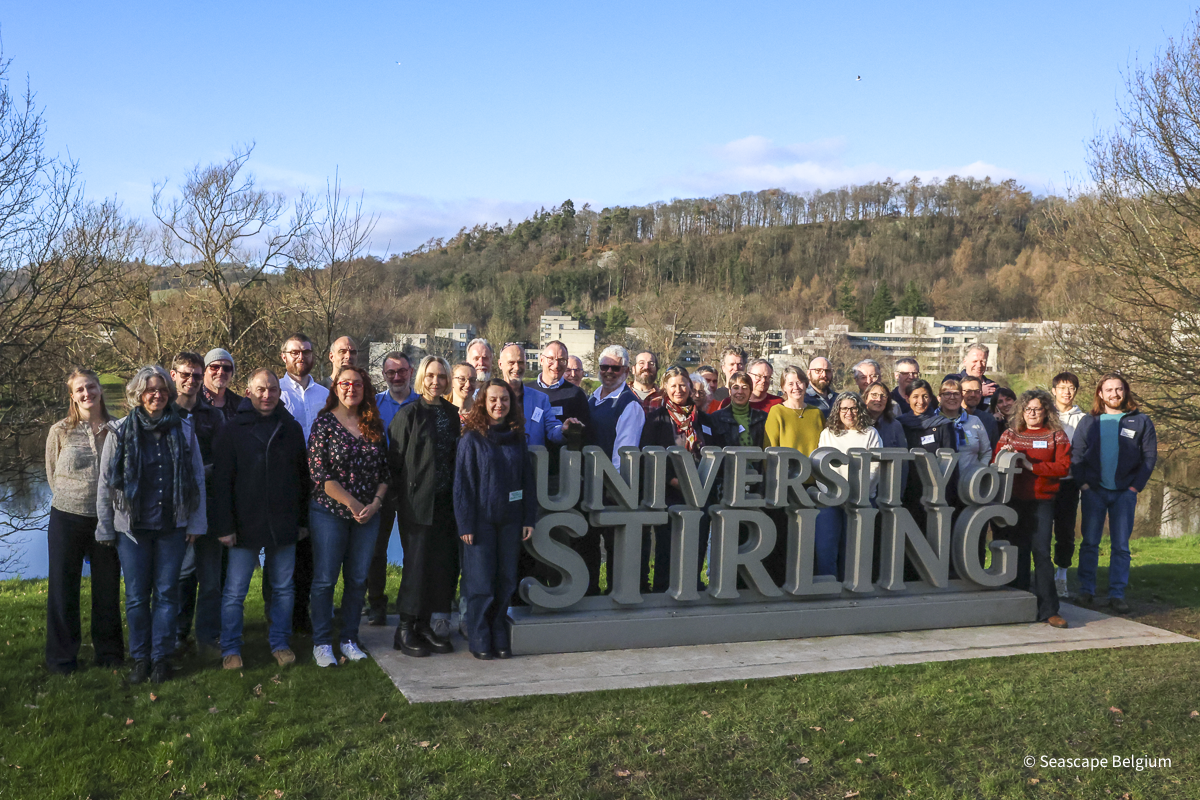
LandSeaLot partners at the University of Stirling provided a warm welcome in Scotland last week for the project’s second integration event. The workshops provided an opportunity to share techniques for integrating satellite Earth Observation with on-site monitoring, alongside concerted efforts to harmonise data management and de-fragment stakeholder communities. TransEurope joined the 40-strong team of international researchers co-designing a joint observation strategy for the land-sea interface.
Real-Time Data for Regional Resilience
A fascinating field trip to the Forth ERA (Forth Environmental Resilience Array) catchment area highlighted the profound importance of supporting coordinated and informed stewardship of the water environment’s complex systems. From monitoring water quality and modelling flood risk, to restoring peatland and assisting with woodland regeneration, the Forth ERA employs around 1,000 sensors to capture real-time environmental data, working closely with local partners and government bodies to inform evidence-based strategies for regional resilience.
Moreover, the experience revealed the value of the human endeavours behind delivering this, when faced with funding challenges, conflicts between different communities, and the dynamic pressures of climate change, demands for water, pollution and competing land use.
Professor Andrew Tyler is the lead for the Firth of Forth LandSeaLot Integration Lab where he runs Hydro Nation Chair, a unique and collaborative programme with the Scottish Government and Scottish Water, embedding scientific research across Scotland’s water sector to drive climate mitigation and work towards #NetZero.
Heritage, Resilience and Water Management Strategies
The day’s itinerary included the chance to enjoy a boat trip on Loch Katrine, exploring the reservoir’s cultural heritage (the site of Scott’s infamous “The Lady of the Lake” poem), Victorian engineering legacy, and the catchment management strategies required to protect the primary source of water for the city of Glasgow.
The journey continued to Flanders Moss, one of the largest raised bogs in Europe, where a viewing tower provided a panoramic perspective on the scale of peatland restoration. Here, the group discussed how the Forth-ERA sensor network tracks the bog’s ability to act as a natural carbon sink and a “sponge” for the region, helping to mitigate flood risks, although transporting heavy sensor equipment across difficult, waterlogged terrain presents its own significant logistical challenges.
Later, the team visited the River Almond to see a digital observatory that uses advanced sensors for real-time “chemical fingerprinting”, identifying many of the pollutants from sewage, urban and industrial run-off that affect the delicate ecosystem.
The monitoring station uses a pump to draw water into a controlled flow-through chamber, where an integrated sensor array provides and transmits real-time high-resolution data on nutrients, clarity, and organic matter.
In addition to learning about efforts to track flooding and drought events, the group also heard from the Atlantic Salmon Trust, working to restore migratory fish routes obstructed by weirs and dams created for harnessing water energy in 18th and 19th century industrial practices.
To bring this complex data to life, a new visualisation platform is currently in development. This innovative app gives the river its own digital persona, providing a dashboard that translates sensor readings into a relatable story and hopes to encourage local residents to report their own observations.
Safer Shipping and Shoreline Recovery
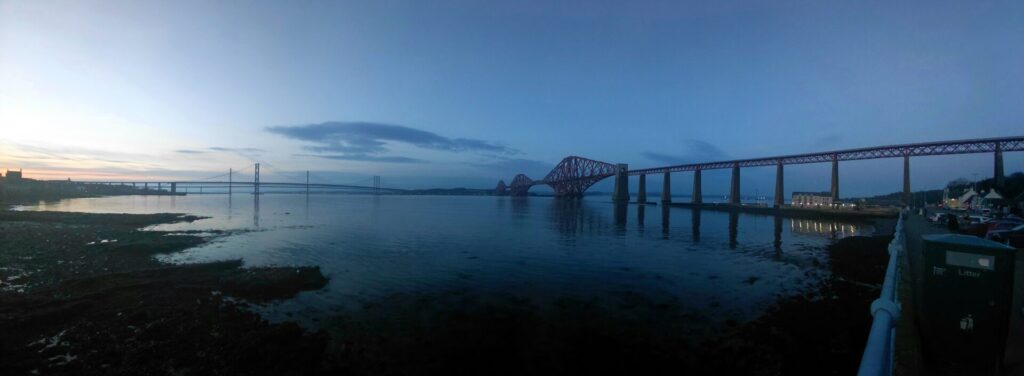
The trip then led to the Forth Estuary, where the project’s digital intelligence supports the region’s busy maritime industry. By providing real-time information on sedimentation, currents, and waves, the Forth-ERA platform can assist harbour authorities and shipping vessels in optimising routes with the aim of improving safety and fuel efficiency.
Finally, set against the backdrop of the iconic Forth bridges, Professor Andrew Tyler related the radium-226 contamination and clean-up story at Dalgety Bay. Since radioactive material was first identified on the foreshore in the 1990s, the site has been a major environmental concern. To address this, Digital Twin techniques were used to predict how tidal currents and coastal erosion might transport the hazardous particles released from the incinerated luminous dials of decommissioned WWII aircraft. This evidence was instrumental in securing a massive remediation project, permanently sealing the area to reduce harmful exposure.
Sincere thanks to Professor Andrew Tyler and his delightful team for sharing an inspiring introduction to their work and providing generous hospitality throughout the integration week. Their work with Forth-ERA is effectively transforming the knowledge pipeline, providing an inclusive and collaborative scientific foundation for advancing climate adaptation and supporting a just transition to net zero across the region.
Benefits for Boaters TransEurope Marinas
50% Discount on Visitor Berthing
With a 6-month contract at a member marina, receive a 50% discount on daily visitor rates.
Valid Across All Member Marinas
Up to five days per year at each member marina, enabling multiple discounted stays.
Smart Solutions
Make the most of a digital membership platform, helpful chartlets and cruising routes.
Benefits for TransEurope Marina Members
Reward Berth-Holders & Attract visitors
Offer your long-term berth-holders exclusive discounts
Become an Environmental Steward
Take part in innovative European ocean conservation projects
Access Peer Expertise
Join a network of experienced marina managers and access specialist training for your staff
